control systems
Operate your integral blinds effortlessly with one concept and five advanced control systems.

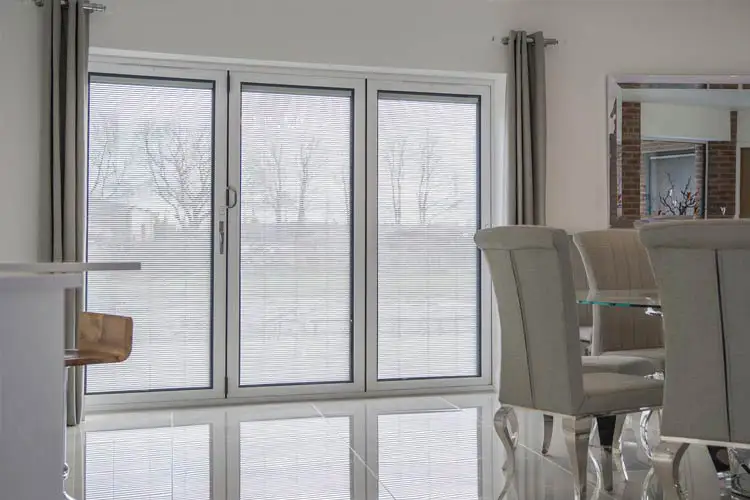
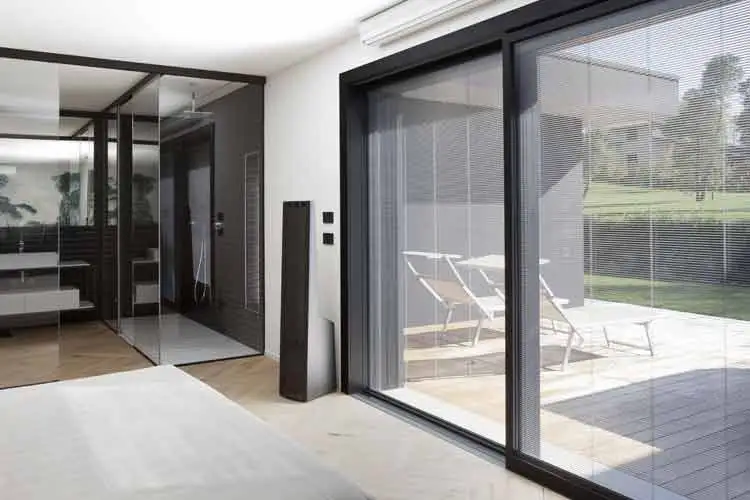
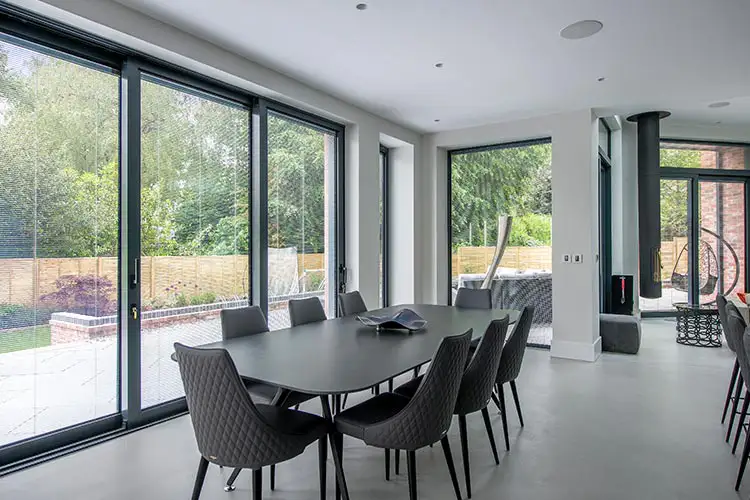
How are integral blinds operated?
We offer five distinct control options to suit your preferences, requirements, and budget.
Our Uni-Blind® sealed units, featuring ScreenLine® integral blinds, are available in both Venetian and pleated styles. These can be operated either manually or through electronic systems.
Our sealed units with ScreenLine® integral blinds inside are available in a choice of Venetian or pleated styles, and can be operated manually or electronically.
Manual control
Our manually operated blinds provide a choice of cord, rotational knob, or wand controls (C System), a cordless slider (SV System), or a magnetic slider (S System). These systems are designed for smooth operation, enabling the blinds to be raised, lowered, and tilted with ease in the case of Venetian blinds. The mechanisms are crafted to be discreet, stylish, and durable, ensuring exceptional performance and user convenience.
Motorised integral blinds
For those looking to integrate modern convenience, our MB System motorised Venetian blinds are a perfect fit. These can be operated via mains motors using either a wall-mounted switch or a remote control. This system also allows users to manage multiple blinds as a group or control each blind individually with separate control boxes.
Our unique control boxes for motorised blinds guarantee hassle-free installation. They are pre-wired, tested, and provide an aesthetically streamlined solution. Additionally, these motorised blinds can seamlessly integrate with home automation systems.
Eco-friendly option
For the eco-friendly homeowner, our W Smart system is a battery-operated motorised Venetian blind, equipped with an external energy saving solar panel that recharges the batteries.
1 concept 5 control solutions
C SYSTEM - MANUAL CONTROL
Cordless Slider
The SL20-22C System allows users to raise, lower, and tilt blinds using a patented magnetic mechanism. This device is fixed to the glass with high-resistance adhesive and features a cord loop and magnet that aligns perfectly with the device’s internal magnetic drive, housed within the head rail. A special cord tensioner ensures seamless operation without compromising the double-glazing unit’s seal or integrity. Available in Venetian and pleated options, this system is ideal for every discerning user.
MB SYSTEM - MOTORISED BRUSHLESS
cordless slider
For those seeking effortless operation, the MB System uses a quiet brushless motor to raise, lower, and tilt Venetian blinds with a wall-mounted or remote control. It is perfect for contemporary luxury homes or high-end projects. Capable of operating up to 12 blinds simultaneously, it is compatible with home automation systems for unparalleled convenience.
SV SYSTEM - CORDLESS SLIDER
cordless slider
The SL20SV system removes the hassle of cords with its innovative single magnetic slider. This magnetic device sits on a slim guide on the unit’s edge, making it simple to adjust the Venetian blinds for raising, lowering, and tilting without cords.
S SYSTEM - SLIDER
cordless slider
The manually operated SL20-The SL20-22S System features a manual magnetic slider for pleated blind operation. The slider is centrally positioned on the glass, allowing smooth adjustment in any direction. This system is well-suited for spaces like attics or skylights, where flexibility is essential.
SV SYSTEM - SYMMETRICAL SLIDER
cordless slider
Why compromise on aesthetics when the SV system offers perfect symmetry? This cordless slider system delivers solar shading and visual harmony, making it ideal for doors and windows where symmetry enhances the overall design. .
PLEATED BLACKOUT - DARKNESS ON DEMAND
Cordless Slider
The Uni-Blinds® pleated blackout system provides near-total light control, thanks to advanced blackout fabrics and designs that eliminate light seepage and maintain high thermal resistance. Perfect for creating a cozy, darkened environment year-round.
SL16 SYSTEM - SLIM FIT
Cordless Slider
The manually operated SL20-22C System raises, tilts and lowers the blinds using a patented magnetic device that is attached to the glass by means of high-resistance adhesive tape. It features a cord loop and a magnet that is perfectly interfaced with the magnetic joint of the internal drive, which is completely housed inside the head rail. The cord is kept under tension by means of a special cord tensioner applied to the glass. This magnet principle does not compromise the unit seal and guarantees the integrity of the double-glazing unit. The C system is available with Venetian or pleated blinds.
W SMART SYSTEM - BATTERY OPERATED
Cordless Slider
Ideal for composite doors and vertical sliding windows, the SL16 system comes equipped with 10mm slimline slats, making it the only blind system suitable for use within a 16mm cavity. Choose between the cord-controlled SL16C or the slider-operated SL16S for seamless integration.
Innovation comes built-in
Add a splash of colour to your Uni-Blinds
Available in a wide range of colours, you will have no trouble finding a Uni-Blind® that fits your room style and décor.
FAQs
There are numerous different types of blinds available, some of which use fabrics and others are made using hard materials such as PVC, wood and aluminium. The most popular types for UK homes are Venetian blinds, roller blinds, vertical blinds and pleated blinds. At Morley Glass, we provide Venetian blinds and pleated blinds that are fitted into the cavity of a double or triple glazed window windows, which is called an integral blind. These are suitable for all kinds or windows, doors and conservatories, and a hugely popular choice fir bi-fold doors.
It depends on the look you are going for, what level of quality you are seeking and the size of your windows. Curtains can be cheaper if you are comparing a basic fabric and pole/rail combination with a premium quality blind, but equally an entry level blind for DIY fitting would generally cost less than any type of curtain.
Integral Uni-Blinds from Morley Glass are the best choice for the home because they are made to measure and will always look perfect because they are permanently sealed within the glass. Integral blinds are fitted by a window installer and once fitted they are easy to use thanks to a variety of manual and motorised control systems.
Taking care when using all types of blinds will make sure you get the longest lifespan out of them. But with Uni-Blinds integral blinds, available in Venetian and pleated styles, you get the additional benefit of the blind being permanently sealed within the glass unit – so it is difficult if not impossible to damage the blind without breaking the glass. This means integral blinds can last a long time, especially those like Uni-Blinds that are manufactured using the world-renowned ScreenLine integral blind systems.
As bedrooms are the most comfortable and personal of spaces, privacy and shading matters a lot here. You should aim to use a blind that blocks out light completely if you are a light sleeper or live in an area affected by light pollution, such as the Uni-Blinds pleated blackout integral blind. But, if you are not looking for a total blackout, Uni-Blinds Venetian integral blinds and standard pleated integral blinds will give you the perfect balance of shading and great looks.






News & Blog