
Hospital Blinds
The complete guide to blinds for hospital windows and healthcare environments in India.
Managing Shading, Comfort, and Privacy in Hospitals
Any hospital, clinic, health center, or social care environment, including Aashrams, requires thoughtful management of shading, privacy, and patient comfort. From consultation rooms and wards to waiting areas or hallways, the levels of light, visibility, and seclusion need to be adaptable. These adjustments cater to factors like sunlight, patient privacy, and comfort.
The most effective way to address these needs is by fitting blinds or curtains to both external and internal windows and doors. However, selecting the right type of blind or curtain depends on various considerations, some of which apply universally to buildings, while others are specific to healthcare and care environments.
Choosing Between Blinds or Curtains in Indian Healthcare Settings
Indian healthcare spaces, ranging from clinics and hospital wards to social care facilities such as Aashrams, require solutions tailored to their diverse privacy and shading needs. For patient wards, curtains mounted on a track remain a practical choice. However, for features like glass partitions, vision panels in doors, or external windows, integral blinds offer several advantages.
Types of Blinds Suitable for Indian Healthcare
Just like in any building designed for public or commercial use, the following types of blinds are commonly employed in healthcare settings:
- Venetian blinds
- Pleated blinds
- Roller blinds
- Vertical blinds
Two of these, Venetian and pleated blinds, also have the unique capability of being encapsulated within glass panes of double-glazed windows. These integral or between-glass blinds are becoming increasingly popular for their specific benefits in healthcare-exposed environments.
The Case for Integral Blinds Integral blinds, also referred to as integrated or within-glass blinds, stand out due to their numerous advantages in healthcare facilities. These blinds are particularly suitable in Indian contexts where hygiene, safety, and cost efficiency are high priorities. We’ll explain these benefits in further detail later by outlining their applications in a healthcare setting.
Innovation comes built-in
Key Considerations for Blinds in Indian Hospitals and Healthcare Facilities
When choosing blinds for a healthcare environment, here are some factors tailored to the Indian context that decision-makers must consider:
Privacy and Observation Balance
Healthcare facilities need to strike a balance between ensuring patient privacy and allowing for observation by staff when necessary. This becomes particularly critical in spaces such as patient wards, consultation rooms, or offices where private discussions occur, while ensuring that patient care remains uncompromised.
Hygiene and Swachh Bharat Abhiyan Guidelines
Blinds need to comply with hygiene standards, including alignment with Swachh Bharat Abhiyan objectives. They should be easy to clean without compromising infection control established in the facility. The frequency of cleaning cycles, associated costs, and whether the blinds themselves complicate window or frame cleaning need to be evaluated.
Integral blinds, for instance, remain sealed within the glass and only require routine cleaning of the external control mechanism, making them an excellent hygienic option.
Safety First
Safe designs, such as "safe control knobs," are vital in environments with vulnerable patients. This eliminates risks posed by loose cords and other potentially hazardous elements.
Compliance with Fire Safety Standards
Materials and designs must adhere to fire safety regulations to prevent additional risks in the event of an emergency. Fire-retardant blinds are a must in all Indian healthcare environments.
Promoting Comfort and Aesthetics
Creating a calming, comfortable environment for patients is essential. The blinds should complement the room's overall décor while maintaining a sense of neutrality. Visual harmony plays a significant role in easing patient anxiety and promoting a sense of well-being.
Energy Efficiency and Climate Adaptation
Ensuring energy efficiency is critical in climates like India’s, where temperature extremes are common. Blinds should contribute to reducing heat loss during winters, minimizing heat gain in the scorching summer months, and maintaining an optimal indoor climate.
Quality of Light and Glare Control
Too much heat or brightness can create discomfort for patients and staff alike. While natural light has health benefits, excessive sunlight can lead to glare and an unbearable atmosphere. The right blinds can help manage light levels effectively.
Durability and Longevity
Materials must withstand frequent cleaning and potential wear and tear in a hospital setting. Longevity ensures that blinds maintain their aesthetics and functionality over the years, minimizing replacement costs.
Ease of Operation
Blinds should be easy to operate for both staff and (where applicable) patients. Overly complicated systems could result in underutilization, so simplicity in design is highly recommended.
SV SYSTEM
cordless slider
W SMART SYSTEM
Battery Operated
S SYSTEM
slider
MB SYSTEM
motorised brushless
SL16 SYSTEM
slim fit
SV+ SYSTEM
symmetrical slider
PLEATED BALCKOUT
darkness on demand
C SYSTEM
manual control
Uni-Blinds® integral blind options for hospitals

ScreenView®
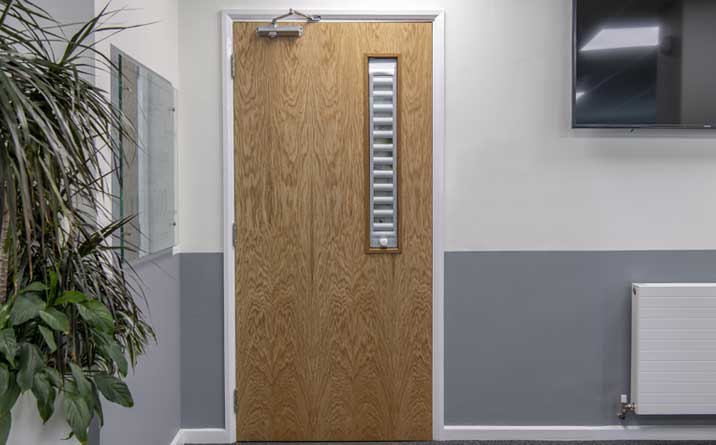
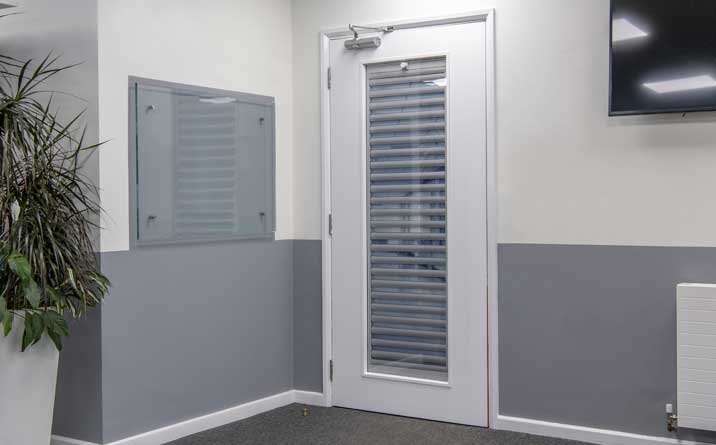
Ideal for vision panels in doors, and providing an alternative to vision panel flaps, the Uni-Blinds® ScreenView® integral blind system provides the perfect solution for balancing patient confidentiality and privacy with observation and monitoring. Being permanently encapsulated within the double glazed units in windows, doors and partitions, this unique blind system is safe, easy to use, hygienic and maintenance-free, whilst enabling privacy in an instant.
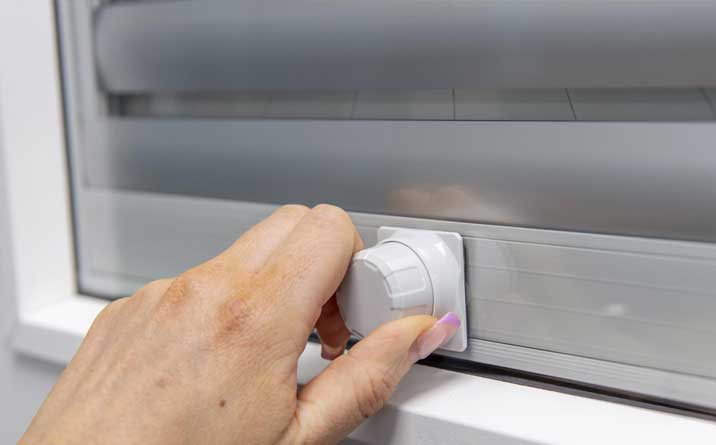
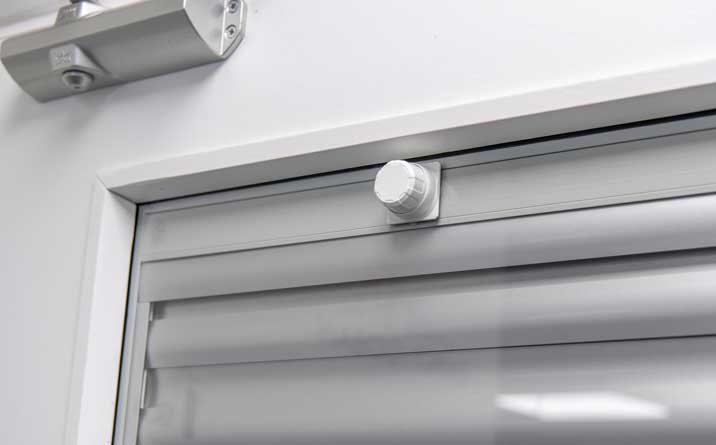
It features wide 35mm slats that open and close in a ladder arrangement to allow light transmission and vision as required. Opening and closing is controlled by a knob mounted on the bottom rail, which is treated with the Santized® antimicrobial finish to provide active biocidal protection.
ScreenLine® System
Purpose-designed for internal and external glazing in commercial environments, the System is a Venetian blind featuring a 12.5mm slat which is integrated into a double-glazed unit with a 20mm cavity – making it suitable for almost all types of existing window frames.
It has a tilt only function which is manually operated by an anti ligature external knob on one side of the window. A specially designed corner key containing a rotational magnet is connected to the external knob by a flexible drive cable located within the glazing cavity of the window frame. With dual control the blinds can be operated from both sides, perfect for windows within hospital wards.
As the only visible control is the external knob, the glass surface remains completely free and easy to clean. Our System can also be modified to incorporate a 16mm slat to allow it to be used with windows featuring a wider 24mm cavity.

Fire rated Uni-Blinds® integral blind systems
Another important benefit with Uni-Blinds® is the ability to specify fire rated integral blinds with ScreenLine systems inside. These are available to provide 30 to 120 minutes integrity and insulation fire-resistance.
ScreenLine ® has developed a specification in conjunction with Pyroguard which complies with the performance criteria set out in the EU 305/2011 Construction Products Regulation. And this has been independently verified by TUV UK, a UKAS accredited third party testing house.
Add a splash of colour to your Uni-Blinds
Available in a wide range of colours, you will have no trouble finding a Uni-Blind® that fits your room style and décor.
FAQs
There are numerous different types of blinds available, some of which use fabrics and others are made using hard materials such as PVC, wood and aluminium. The most popular types for UK homes are Venetian blinds, roller blinds, vertical blinds and pleated blinds. At Morley Glass, we provide Venetian blinds and pleated blinds that are fitted into the cavity of a double or triple glazed window windows, which is called an integral blind. These are suitable for all kinds or windows, doors and conservatories, and a hugely popular choice fir bi-fold doors.
It depends on the look you are going for, what level of quality you are seeking and the size of your windows. Curtains can be cheaper if you are comparing a basic fabric and pole/rail combination with a premium quality blind, but equally an entry level blind for DIY fitting would generally cost less than any type of curtain.
Integral Uni-Blinds from Morley Glass are the best choice for the home because they are made to measure and will always look perfect because they are permanently sealed within the glass. Integral blinds are fitted by a window installer and once fitted they are easy to use thanks to a variety of manual and motorised control systems.
Taking care when using all types of blinds will make sure you get the longest lifespan out of them. But with Uni-Blinds integral blinds, available in Venetian and pleated styles, you get the additional benefit of the blind being permanently sealed within the glass unit – so it is difficult if not impossible to damage the blind without breaking the glass. This means integral blinds can last a long time, especially those like Uni-Blinds that are manufactured using the world-renowned ScreenLine integral blind systems.
As bedrooms are the most comfortable and personal of spaces, privacy and shading matters a lot here. You should aim to use a blind that blocks out light completely if you are a light sleeper or live in an area affected by light pollution, such as the Uni-Blinds pleated blackout integral blind. But, if you are not looking for a total blackout, Uni-Blinds Venetian integral blinds and standard pleated integral blinds will give you the perfect balance of shading and great looks.






News & Blog